Snorkeling ZanzibarAn Independent Guide Check Availability

Snorkeling in Zanzibar

Snorkeling in Zanzibar sounds like one activity and is really nine reefs, and the one you get depends entirely on which boat you booked. Compare six trips on the reef each reaches, the hours in the water, and the fees still waiting at the pier.

Updated 2026-08-12

  • Rated 4.3 to 4.7 on GetYourGuide
  • Free cancellation up to 24 hours
  • Fees checked August 2026

Quick answer

Almost every good reef in Zanzibar needs a boat, and almost every boat sells the same three words — dolphins, snorkeling, sandbank. What changes is the reef underneath. We currently compare six bookable trips: four run to Mnemba Atoll, one to the quieter coral off Tumbatu, one south into Menai Bay. Prices run $41 to $90 per person, and on one of them a further $22 is collected in cash on the day.

Key takeaways

Zanzibar Snorkeling Tours Compared

Six trips, listed by what they cost before fees. All six are booked through GetYourGuide with free cancellation up to 24 hours before departure and reserve-now-pay-later; prices and ratings were checked in August 2026 and are set by the operator, not by us. The reef named on each card is the one the itinerary actually reaches.

Independent tour comparison
Last price check: August 2026
Fees verified against official information and operator listings
Traveller feedback reviewed: 3,300+ reviews

Which Reef, How Long, and What Is Still Payable

The column that decides your day is the second one. Four of these six boats point at the same atoll, so the real choice is between crowded-and-famous, quiet-and-coral, or a full day of sailing with lunch attached.

Tour Reef reached Price Book Duration Payable on the day Rating
Prison Island & Nakupenda Nakupenda sandbank, Changuu fringe $41 Details 7-8 hours $22 cash 4.5 (738)
Mnemba half-day (Yonazi) Mnemba Atoll $42 Details 3-6 hours Lunch upgrade optional 4.3 (804)
Mnemba from Kendwa Mnemba Atoll + sandbank $55 Details 4 hours Nothing — fees included 4.7 (1,248)
Private Mnemba safari Mnemba Atoll $70 Details 4 hours Lunch extra 4.5 (22)
Tumbatu small group Tumbatu coral gardens $71 Details 4 hours Tips included 4.6 (67)
Safari Blue day trip Menai Bay, Kwale reef $90 Details 7 hours Tips 4.6 (512)

Ratings and review counts are the operators' own figures on GetYourGuide in August 2026. Two of the six run under the same provider, Captbarnabatours — the Kendwa Mnemba trip and the Tumbatu trip — so booking both means the same crew twice, which several reviewers treat as a feature rather than a problem.

Live Dates and Prices

The calendar below is the operator's own for the most-booked trip on this page. Dates, times and the final price come from GetYourGuide.

Powered by GetYourGuide

How to Choose Between the Six Zanzibar Snorkeling Trips

Pick by the answer to one question: do you want the famous reef, the quiet one, or a whole day on the water with lunch on an island?

You want Mnemba, done well, without overthinking it

Take the $55 trip from Kendwa. It is the highest-rated of the six at 4.7 from 1,248 reviews, it runs four hours, and it is the only listing here that spells out that the Mnemba Atoll marine conservation fee and government taxes are already inside the price. That single line is worth real money: elsewhere the $25 Mnemba Marine Special Area charge for a non-East African adult can land on you at the boat.

Pickup is by motorboat straight off the beach if you sleep in Nungwi or Kendwa, from around 08:00; everyone else meets at Mama Mia restaurant in Nungwi at 08:20. The boat looks for dolphins first, snorkels the atoll second, then — tide permitting — stops at the disappearing sandbank before turning back around 12:30.

What the listing does not promise, and should be read carefully: the sandbank only exists at low water. When the tide is in, the stop becomes Muyuni or Jomba beach instead. If the sandbank photograph is the reason you are booking, check the tide table for your date first.

You want the coral, not the crowd

Book Tumbatu at $71. Tumbatu sits about two kilometres off the coast near Nungwi, and the coral there is in better condition than the reef Mnemba is famous for, largely because eight boats a morning go there instead of eighty. The trip is capped at eight participants and includes pickup from Kendwa, Nungwi, Kiwengwa, Matemwe or Pwani Mchangani.

Be honest with yourself about the trade. Tumbatu is the intermediate snorkeler's answer. There is no sandbank, no BBQ, and the operator's own review summary carries the criticism as well as the praise: some travellers found the snorkeling limited and would have preferred a richer site. Jason from the United States, 4 August 2026, wrote the fairest line on the page — "swimming with the dolphins was amazing but don't expect to see a lot in the coral, much like most of the world coral reefs are struggling everywhere".

One cultural note that matters and that the tour will not repeat loudly enough: Tumbatu's residents are conservative Muslims. Beachwear stays on the boat, and you ask before photographing anyone.

You want a full day, sailing and lunch included

Safari Blue at $90 is the only trip here that fills a day. It leaves Fumba village on the south-west coast, sails a dhow into the Menai Bay Conservation Area, snorkels off the Kwale sandbank, swims a mangrove lagoon, and puts a seafood BBQ on Kwale Island before sailing back, roughly 09:00 to 16:30. Pickup, guide, kit, lunch, fruit and soft drinks are in the price, and the guides work in English, French, German, Italian and Swahili.

Two things to know before booking. First, the shared departure needs a minimum of four passengers, or the operator reschedules you. Second, this is not the original Safari Blue. That company still runs out of Fumba, publishes its own prices and states plainly that it is the only genuine Safari Blue excursion from the village; what you are buying here is a $90 seat with Big Mir Tours & Safari on the same concept. The reviews for it are good — 4.6 from 512, with the same guide, Omar, named again and again — but the value-for-money sub-score, 4.4, is the lowest line on its own card.

Crowding is real on this route too. Travellers regularly describe twenty-five or more boats anchored at the same sandbank on a busy day.

You are on a budget and want the day out more than the reef

Prison Island and Nakupenda is $41 and the cheapest way onto the water from Stone Town. You sail thirty minutes by dhow to Changuu, walk among Aldabra giant tortoises — some of them over two hundred years old — then move to the Nakupenda sandbank for swimming, snorkeling and a seafood BBQ.

Budget honestly, though. A further $22 per person is collected on the day: $10 marine conservation and $12 Prison Island entry, a charge the operator says has applied since 1 September 2025. That makes the real number $63, still the cheapest full day here, but not $41. Bring the cash; it is not payable online.

And set expectations about the snorkeling itself. The reef around Changuu is modest next to Mnemba or Tumbatu, and mornings collect cruise-ship groups. This is a history-and-sandbank day with a snorkel in it, not a reef trip.

You want the boat to yourself

The private Mnemba safari is $70 per person, four hours, with a private boat, a guide who works in six languages and pickup from Stone Town, Nungwi, Paje, Kizimkazi or Kijambani. Marine conservation charges are stated as included; lunch is extra. It has only 22 reviews, which is a small sample, but they rate transport 4.9 and mention guides who help with underwater filming.

The reason to pay the premium is not the reef — it is the same atoll the $42 boat visits. It is the ability to leave when the water gets busy, arrive before the fleet, or spend the whole four hours snorkeling if the dolphins do not show. On a reef where the crowd is the problem, control over your own timetable is the product.

You want the cheapest look at Mnemba

Yonazi Travel's half-day starts at $42 and runs three to six hours depending on the option, with hotel pickup available island-wide and a meeting point at Muyuni Beach near Matemwe — twenty minutes from the atoll, the shortest crossing of any trip here.

It is also the lowest-rated of the six at 4.3 from 804 reviews, with value for money at 4.1. The listing is unusually candid about why. In its own "know before you go" it warns that the dolphin area is often crowded with boats that "sometimes surround the dolphins in a way that can resemble hunting — something we do not support", and adds that it cannot control other operators. Take that at face value: it is the most honest paragraph on any of the six listings, and it also tells you exactly what a busy morning at Mnemba looks like.

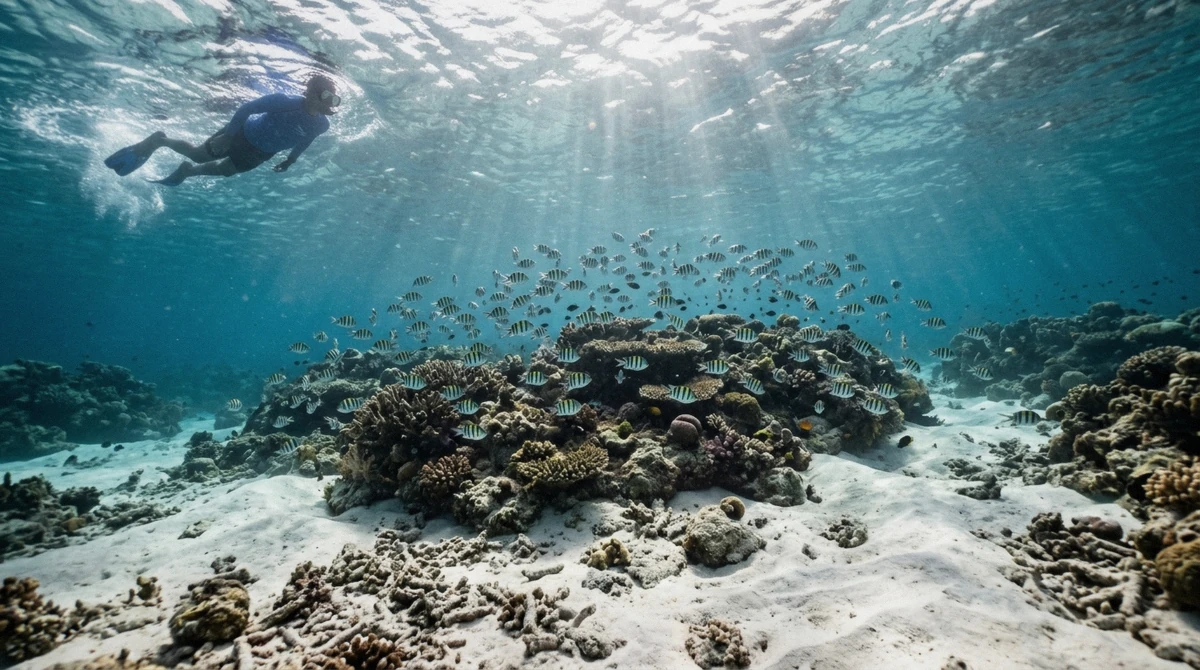
Snorkeler above a coral head with sergeant majors and blue surgeonfish while snorkeling in Zanzibar at Mnemba Atoll
Mnemba's reef sits between roughly two and five metres down, which is why it works for beginners — and why every boat on the north coast wants the same patch of it.

What Snorkeling in Zanzibar Actually Looks Like

The brochure numbers are real. So is the reef's condition. Both belong in the same paragraph.

The numbers, and what they hide

Zanzibar's waters hold more than 600 fish species and around 50 types of coral. Mnemba's protected reef alone accounts for over 400 fish species, and fishing inside it is banned. Those figures are accurate and they are also the reason the island sells snorkeling so confidently.

What the figures do not describe is coral cover. Snorkeling Report, which surveys spots rather than sells them, records the shallow reefs of Zanzibar as being in average condition even inside the protected areas, with beautiful soft corals, branching corals and gorgonians in places rather than everywhere. On the tidal flats, where the water rarely exceeds one to two metres, the underwater landscape is frankly poor at first glance — until you slow down and start seeing what lives on the rocks.

That is the honest frame for a Zanzibar snorkeling trip. You are not going to swim through continuous coral gardens. You are going to hang over a patchy reef where a great deal of small, strange, specific life is going about its business.

What you will genuinely see

Hundreds of sergeant majors gather around the boats the moment they anchor at Mnemba — that is the wall of fish in everyone's photos. Below them: snappers, surgeonfish, moray eels, Moorish idols and lionfish. On sand, red-knobbed starfish and pentaceraster sea stars, sometimes in numbers, and close to a dozen species of sea urchin.

Zanzibar is a strong destination for clownfish specifically. Two species live in the archipelago, the twobar anemonefish and the skunk clownfish, and they share their anemones with porcelain crabs and threespot dascyllus at depths any snorkeler can reach. Among the showpieces are the Arabian angelfish, the palette surgeonfish, the powder blue tang and the blackspotted rubberlip.

The small stuff is the reward for patience: robust ghost pipefish, roundbelly cowfish, jointed razorfish, banded cleaner shrimp, juvenile sweetlips, nudibranchs, leaf fish, and around Tumbatu, ribbon eels and inquisitive batfish.

What you probably will not see

Turtles and rays are rarely encountered in Zanzibar's shallows. Several listings on every booking platform put sea turtles in their highlights; Snorkeling Report's assessment of the archipelago is blunt in the other direction. Treat a turtle as a lucky day, not a feature you paid for. If seeing turtles reliably is the point of the trip, the aquarium-style pools at Nungwi keep rescued green turtles in a tidal lagoon, which is a different thing entirely and should be described as such.

Humpback whales do pass close to the coast between July and November, and whale sharks turn up occasionally. Neither is a reason to book a snorkeling trip. Both are a good reason to keep your eyes up during the crossing.

The Realistic Sightings List

What actually turns up on a Zanzibar snorkeling trip, and where it tends to be. Nothing here needs luck except the last two rows.

  • Sergeant majors

    In their hundreds around anchored boats at MnembaEvery trip
  • Twobar anemonefish

    In anemones on shallow coral heads, often with a porcelain crabReliable
  • Red-knobbed starfish

    On sand at Nakupenda, Blue Lagoon and the Kwale flatsReliable
  • Powder blue tang

    Reef edges at Mnemba and TumbatuCommon
  • Moray eels

    Holes in the coral heads, Mnemba and TumbatuCommon
  • Lionfish

    Under overhangs; look, do not crowd themCommon
  • Ghost pipefish, razorfish, cleaner shrimp

    Rubble and rock in the shallows, for patient snorkelersIf you slow down
  • Green turtles

    Rarely seen in the shallows despite the listingsLucky day
  • Rays

    Rare in snorkeling depth around UngujaLucky day

Compiled from Snorkeling Report's Zanzibar spot survey and the species named in the six operators' own itineraries, cross-checked August 2026.

The Reefs, One by One

Nine places get sold as snorkeling in Zanzibar. They are not interchangeable, and only some of them have a bookable boat on this page.

Mnemba Atoll — the famous one

A coral islet off the north-east coast, ringed by white sand, with the archipelago's best-known reef around it at roughly two to five metres. Over 400 fish species, no fishing, excellent visibility. It is genuinely good, and it is genuinely crowded: dozens of boats converge every morning and drop snorkelers onto the same stretch of reef.

One thing catches people out. Mnemba Island itself is private — the andBeyond lodge is the only thing on it — and day visitors may not land on the beach. Every trip snorkels the surrounding atoll water, which the Kendwa listing states in writing. Reviewers on other listings also report crews substituting a dead patch of reef nearby for the atoll itself, which is an argument for booking an operator with a long, recent review history rather than the cheapest boat on the beach.

Reached here by the $55 Kendwa trip, the private safari and the $42 half-day.

Tumbatu — the one that still has coral

About two kilometres off the north-west coast near Nungwi, with coral gardens in noticeably better shape than Mnemba's and a fraction of the traffic. Batfish, ribbon eels, leaf fish, nudibranchs, pipefish and juvenile sweetlips are what experienced snorkelers come for. Most local boats actually stop at Mwana wa Mwana, the islet off Tumbatu's northern tip which separates from the main island at high tide.

If you are staying in Nungwi and comfortable arranging things yourself, a local boat can be had for under $15 — with no guide, no kit worth using and no schedule. The organised small-group trip is $71 and caps the boat at eight.

Menai Bay and Kwale — the Safari Blue water

The conservation area off the south-west coast, reached from Fumba village. Snorkeling here is a stop inside a bigger day: dhow sailing, a sandbank, a mangrove lagoon swim and a seafood BBQ on Kwale Island. The reef is decent rather than spectacular; the day is the product.

Reached here by the Safari Blue day trip.

Nakupenda and Prison Island — the Stone Town half day

Changuu, universally called Prison Island, is a thirty-minute dhow ride from Stone Town. Its 1894 building never actually held prisoners — it opened as a yellow-fever quarantine station — and the draw today is the colony of Aldabra giant tortoises, some over two centuries old. Nakupenda is the sandbank nearby where the swimming and snorkeling happen. The reef is modest, mornings collect cruise passengers, and the water is warm and shallow enough for children.

Reached here by the Prison Island and Nakupenda day, where $22 in fees is payable on the day.

Chumbe Island — the best reef, and not on this page

Chumbe Island Coral Park, eight kilometres off the west coast, is arguably the finest snorkeling in East Africa: a sanctuary with around 200 hard coral species and over 440 fish species, closed to fishing since the 1990s. Divers who have seen both describe it as far more impressive than Mnemba.

It is also deliberately hard to reach. A maximum of fourteen day visitors are allowed on the island at any time, the day trip runs about $120 with a further $25 Blue Economy Levy for adult foreigners, bookings open only a few days ahead and depend on lodge availability, and the guided snorkel is roughly an hour at low tide, because currents build over the reef when the water rises.

We do not compare a Chumbe listing here. Resold seats on the platforms have appeared at more than double the island's own price, and there is no reason to pay a middleman for something with fourteen places. Book it at chumbeisland.com, plan the rest of your itinerary around the date you get, and treat it as the reef trip of the holiday.

Blue Lagoon, Michamvi and Pingwe — the starfish photo

A calm, shallow east-coast spot near Michamvi and Pingwe, snorkelable straight off the beach, and the source of most of the starfish pictures you have seen from Zanzibar. It suits families and first-timers, and guided trips run roughly $30 to $50, often bundled with lunch at The Rock restaurant.

The catch is the tide. At low water the lagoon becomes too shallow and too fragile to snorkel, and on the east coast that window can be narrow. Do not book a Blue Lagoon morning without a tide chart in front of you.

Nungwi — the free one

The most dependable shore snorkeling on the island. The reef at the northern tip is narrow and open to the sea, with a sandy drop-off punctuated by coral patches, and unlike the east coast the water stays deep enough to swim through most of the day. Free with your own mask; guided sessions run about $15 to $30.

Nungwi is also the one place regularly offering night snorkeling with bioluminescent plankton. The coral is patchy rather than continuous and the beach vendors are persistent, but no other spot lets you decide to snorkel twenty minutes before you do it.

Kizimkazi — the dolphin village

A fishing village at the southern tip, and the island's original dolphin-watching centre; bottlenose and humpback dolphins are both regularly seen. Trips run $30 to $50 and pair a dolphin search with a nearby reef stop, where the snorkeling is decent but secondary.

It is also where the ethics question is sharpest, and it is a ninety-minute-plus drive from the north coast. If you are based at Nungwi or Kendwa, the Mnemba and Tumbatu boats reach dolphins without the transfer.

Pemba — the serious one

Fifty kilometres north of Unguja, with the archipelago's least visited reefs — Misali Island and the Emerald Reef, giant groupers, reef sharks, coral walls and almost no boats. Getting there means a thirty-minute flight or a ferry, trips run $50 to $100 and up, and accommodation is thin and eco-lodge shaped.

Pemba works as a two- or three-night extension, never as a day trip. Currents around Misali can be strong. If you have snorkeled Mnemba and left flat, this is the honest answer to where the good stuff went.

Where Each Reef Sits

Distances decide your morning more than prices do. Boat-only reefs are marked in coral; the two places you can snorkel from the sand are in blue.

Boat-only reefs
Shore snorkeling

What You Still Pay After You Have Paid

Zanzibar collects money in several places, and only some of it goes through the booking page. Budget these before you compare prices.

The $44 that has nothing to do with snorkeling

Since 1 October 2024 every visitor to Zanzibar must hold an inbound travel insurance policy from the Zanzibar Insurance Corporation, bought through the official portal at visitzanzibar.go.tz. It costs $44 for adults and $22 for children aged three to seventeen, covers ninety-two days, and is required whether or not you already hold travel insurance from home. It is checked at immigration.

This is not a snorkeling fee, but it is the first $44 of your Zanzibar budget and almost no snorkeling guide mentions it.

Marine conservation charges, and where they hide

The Mnemba Marine Special Area charges $25 per non-East African adult and $10 per child. Zanzibar's other marine conservation areas — Menai Bay, Changuu-Bawe, Chumbe, the Pemba Channel — moved from $3 to $10 per day on 1 September 2025.

What matters is whether the boat has already paid it. The Kendwa Mnemba trip lists marine conservation fees for Mnemba Atoll and government taxes among its inclusions, and the private safari states entrance fees and marine conservation charges are included. The Prison Island trip does the opposite and says so clearly: $22 per person on the day, made up of $10 marine conservation and $12 island entry.

When a listing is silent, ask before you pay a deposit, and carry small dollars either way.

Tips, and the honest amount

Boat crews and guides expect roughly $3 to $5 per person on a half-day trip and $5 to $10 on a full day. It is not in any quoted price except the Tumbatu trip, which lists tips and gratuity among its inclusions — one of the few listings anywhere on the island that does.

Bring the tip in cash in small notes. On a beach-launch pickup there is nowhere to change money and no card machine within an hour.

The Zanzibar Snorkeling Fee Stack

Everything a snorkeling day can cost you beyond the online price, checked in August 2026.

Charge Who pays Amount Book When
ZIC inbound insurance Every arriving traveller $44 adult / $22 child Before arrival
Mnemba Marine Special Area Non-EAC visitors to the atoll $25 adult / $10 child Included on 2 trips
Other marine conservation areas Menai Bay, Changuu-Bawe, Chumbe, Pemba $10 per day (was $3 until 1 Sep 2025) At the boat
Prison Island entry Everyone landing on Changuu $12 Cash on the day
Chumbe Blue Economy Levy Adult foreign day visitors $25 on top of the ~$120 day rate Paid to Chumbe
Crew tip Customary, not compulsory $3-5 half day, $5-10 full day Cash, on the boat

Amounts are the operators' and authorities' published figures at the time of checking. Conservation charges in Zanzibar have moved twice since 2024, so confirm at booking rather than assuming this table is permanent.

The Dolphin Question, Answered Honestly

Four of the six trips on this page include a dolphin stop. That deserves a straight discussion rather than a highlight bullet.

What the critics say

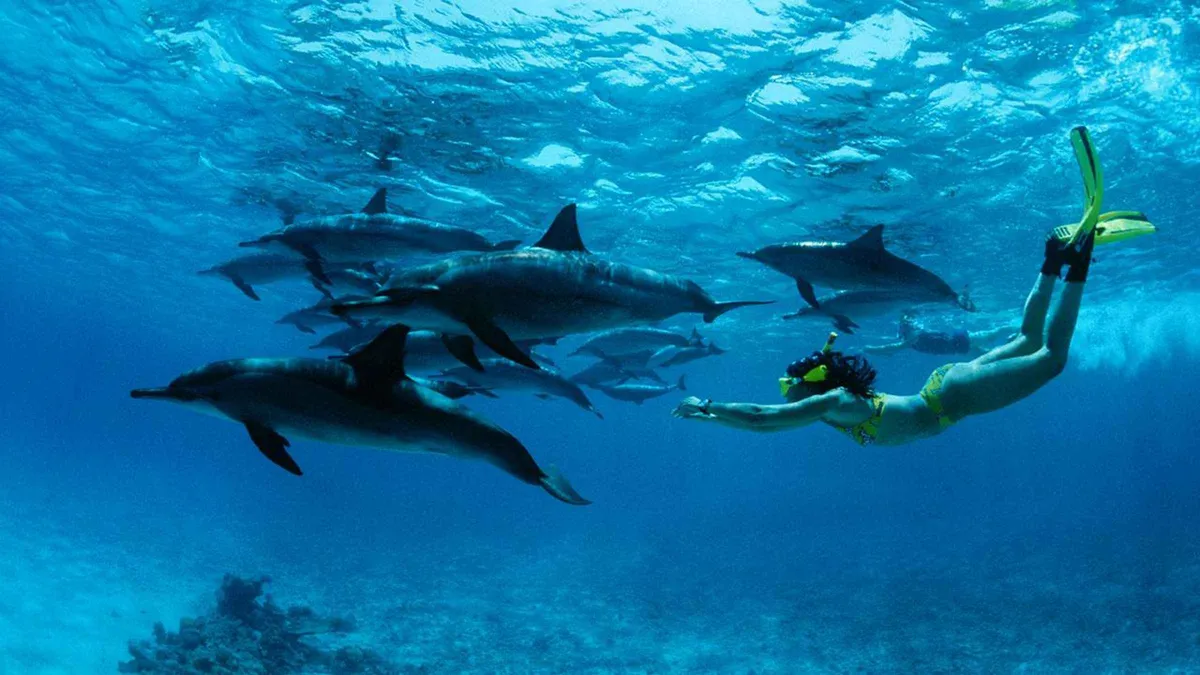
Snorkeling Report's position on Zanzibar is unambiguous: do not join these tours. Dozens of motorboats chase and encircle the same pods every day at Kizimkazi and off Mnemba, which keeps the animals from feeding and resting, and stressed dolphins dive the moment a snorkeler enters the water — so the practice ruins the encounter it sells.

That is a serious argument from a source with nothing to gain by making it, and any page comparing dolphin trips has to print it.

What one of the operators says

The most candid line about Mnemba's mornings comes from a listing we compare. Yonazi Travel's $42 half-day states in its own pre-booking notes that the area is often crowded with boats which "sometimes surround the dolphins in a way that can resemble hunting — something we do not support", and that it cannot intervene because those boats belong to other companies.

An operator writing that into a sales page is not a red flag against that operator. It is a description of the water.

What separates a good crew, in their own customers' words

The difference shows up in dated reviews rather than in tour descriptions, and it is consistent enough to book on.

On the Kendwa trip, Yannick from Germany wrote on 10 August 2026 that his guides left the area as more boats arrived and the scene became hectic for the dolphins, "even though other boats stayed". Aimee from the United Kingdom, 12 August 2026, described the same behaviour from a guide named Hassan: no chasing, and moving on whenever too many boats gathered.

On the Tumbatu trip, Jennifer from Qatar, 5 August 2026, wrote that when her group said they were not comfortable chasing the pod, the crew simply inverted the itinerary — snorkel first, look for dolphins later, when the fleet had gone. Mathilda from Germany, 8 August 2026, reported the same reversal on a day when the dolphins did not show early.

That is the whole test. A crew that will change the running order, or leave, is a crew that is not going to drive a boat at a pod for your photograph.

How to behave in the water

Enter slowly and quietly rather than jumping en masse. Never swim at a pod or try to cut across their line. Do not touch, and do not use flash. If the animals change direction or dive as you enter, that is the encounter finishing, not an invitation to reposition the boat.

Ask your operator directly, before booking, what they do when six boats arrive. The answer, and how quickly it comes, tells you which kind of morning you have bought.

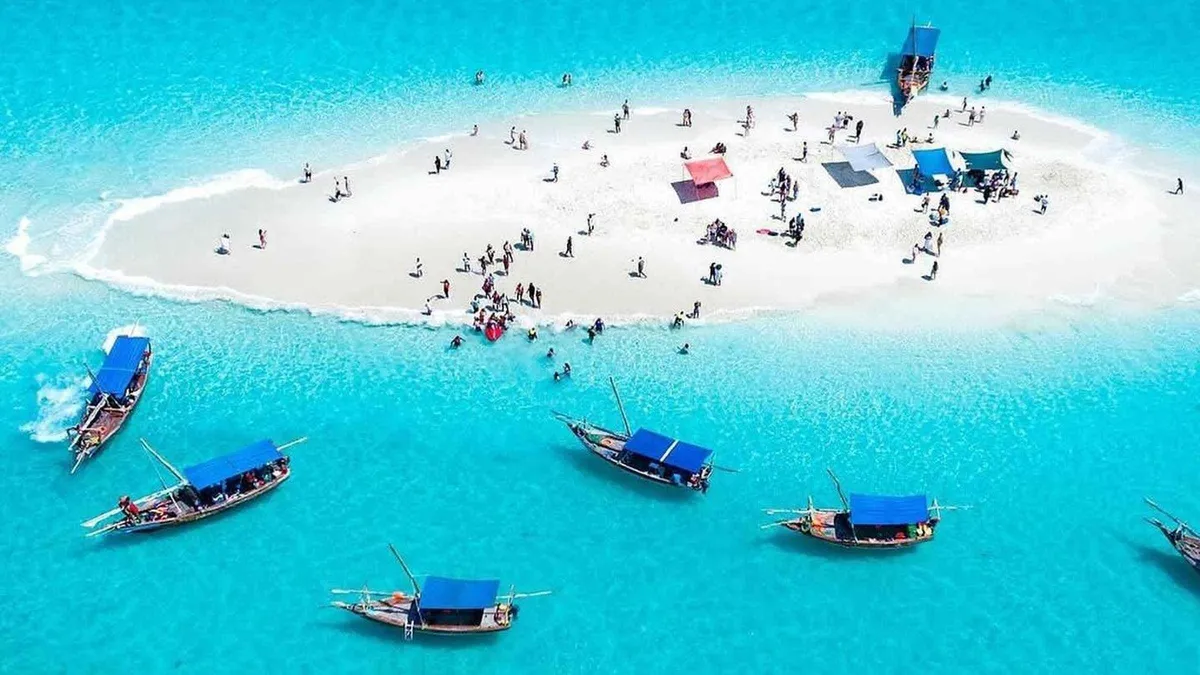
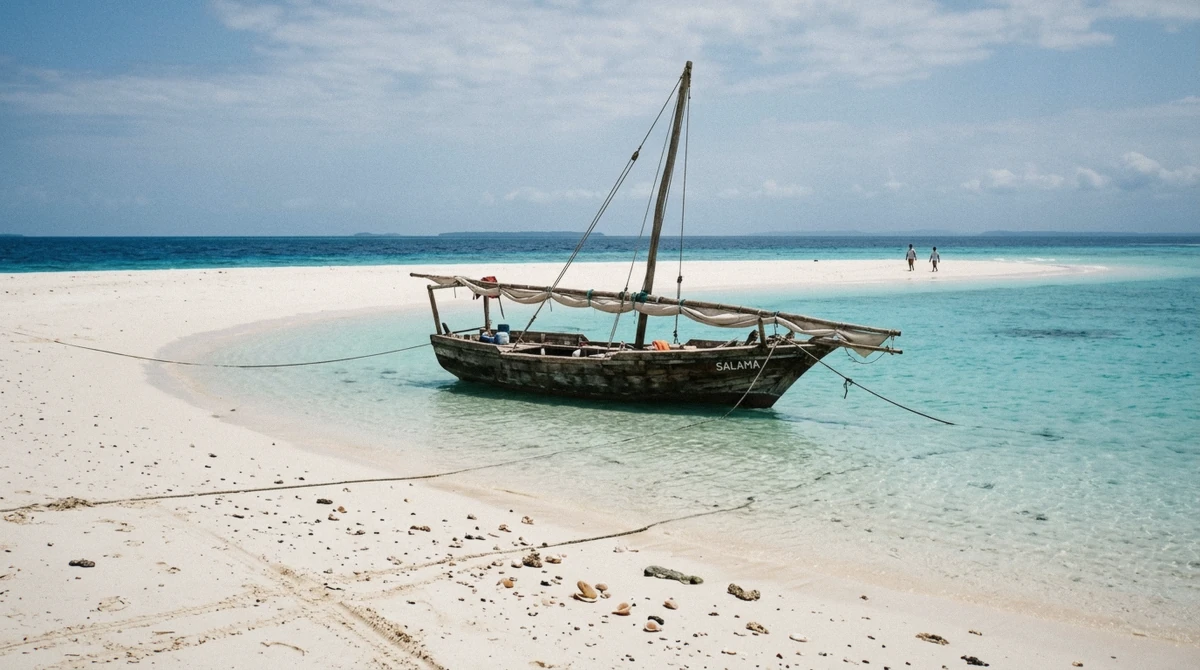
Traditional wooden dhow anchored off a white sandbank at low tide during a snorkeling in Zanzibar day trip
The sandbanks appear and disappear with the tide. When the water is high, the stop becomes a beach instead — worth knowing before you book the trip for the photograph.

Tides, Boats and the Crowd Clock

Two forces shape a snorkeling day here, and neither appears on a booking page: the tide, and the fleet.

The east coast empties

Zanzibar's tidal range is extreme. On the east coast — Paje, Jambiani, Pingwe, Michamvi — low water pulls the sea back hundreds of metres and leaves exposed flats where the lagoon was. Beach snorkeling there is a two-or-three-hour window around high tide, not an activity you can decide on at lunchtime.

The north and north-west, Nungwi and Kendwa, are the exception: the reef is open to the sea and stays deep enough to swim through most of the day. That single geographic fact is why almost every walk-in snorkel and night-snorkel operation on the island sits at the top of the map.

Ask your hotel for a printed tide chart on arrival. Every reception on the east coast has one, and it will do more for your snorkeling than any amount of comparing listings.

The sandbanks are on the same clock

Nakupenda, the Mnemba disappearing sandbank and the Kwale sandbank all belong to the tide. They exist for a few hours and then they are sea. Operators plan around this, which is why departure times on the same trip move day to day and why a trip sold with a sandbank stop can honestly deliver a beach stop instead — the Kendwa listing names Muyuni or Jomba as its high-tide substitute.

If the sandbank matters to you, book a date where low water falls late morning, and expect an early pickup.

The crowd clock at Mnemba

Boats start leaving the north coast around 07:30 and the atoll fills through the morning; by mid-morning the dolphin area can hold dozens of hulls. Weekends and holidays roughly double the traffic. The first boats out get near-empty water — Yannick's 10 August 2026 review describes snorkeling with dolphins almost alone at that hour, "pure magic", before the fleet arrived.

The practical version: take the earliest departure your operator sells, go midweek, and treat any trip that leaves after 09:00 as a scenery-and-swim outing rather than a wildlife one. A private boat buys the same advantage by other means.

Best Time for Snorkeling in Zanzibar, Month by Month

Bars show average monthly rainfall in millimetres; the figure under each month is the average sea temperature in Celsius. Visibility follows the rain, not the heat.

  • Best windows — June to October and December to February, calm seas and 20-30 m visibility
  • Shoulder — March and December, warm water, variable seas
  • April, May and November rains — rough seas, poor visibility, cancelled trips

Sea temperature is a genuine point of disagreement: operator listings quote 25 to 29°C year round, while Snorkeling Report records 22 to 24°C between July and September. Pack a rash guard for those months and the argument stops mattering.

Booked Tour or Doing It Yourself

Zanzibar is one of the few destinations where the do-it-yourself option is genuinely competitive — for exactly two of the nine spots.

Where independent works

At Nungwi you walk in. The reef is at the northern tip, the water stays swimmable through the day, and with your own mask it costs nothing. A guided shore session is $15 to $30 if you want someone to show you the coral patches.

At Tumbatu, a local boat from Nungwi can be arranged for under $15. That is a third of the price of the organised trip, and it is a real option if you are comfortable negotiating on a beach, bringing your own kit and accepting that there is no schedule, no life-jacket policy and no recourse if the captain decides the wind is wrong.

Where it does not

Mnemba is inside a marine special area with a per-person fee and a permit system, and the crossing is an hour from Nungwi. Chumbe caps at fourteen visitors and sells its own places. Menai Bay is a full-day dhow operation with lunch on an island. None of these is something you improvise from the beach.

The other half of the calculation is the equipment. Rental gear on Zanzibar ranges from mediocre to genuinely unpleasant, and a leaking mask ruins a $15 trip and a $90 one equally. The organised boats here include mask, fins, snorkel and life jacket; the beach boats often do not.

What the tour price is actually buying

On the $55 Kendwa trip: a motorboat, a guide, kit, life jackets, fruit and water, the Mnemba conservation fee, government taxes and a beach pickup. On the $90 Safari Blue: a full day, hotel transfer, dhow sailing, a seafood BBQ, drinks and multilingual guiding.

The honest framing is that you are buying the boat, the fee, the kit and the crew's judgement — where to snorkel today, whether to leave when the dolphins are hemmed in, what to do when the sandbank is underwater. On this island, that judgement is the expensive part.

Match Your Base to Your Snorkeling

The most common planning mistake here is booking a hotel first and discovering the reef you wanted is on the other side of the island.

Nungwi and Kendwa — the snorkeler's base

Walk-in reef at the tip, Tumbatu minutes away, Mnemba about an hour by boat, and beach-launch pickups that put you on the water without a road transfer. Both the $55 Mnemba trip and the Tumbatu trip collect from here directly off the sand.

If snorkeling is the reason you chose Zanzibar, sleep here.

Matemwe — closest to Mnemba

Twenty minutes from the atoll via the Muyuni pier, which is the shortest crossing available and the departure point for the Yonazi half-day. Beyond Mnemba the options thin out quickly, and everything else means a long drive.

Stone Town — best for variety

Prison Island, Nakupenda, Chumbe and the Fumba departure for Safari Blue are all within easy reach, which makes this the best base for someone who wants a different kind of day each time rather than the same reef twice. The Prison Island trip and the Safari Blue day both start here or collect from here.

Paje, Jambiani and Michamvi — the tide-locked coast

Blue Lagoon is your local spot and it works only around high water. Everything else is a transfer: Mnemba is well over an hour away by road before you reach a boat. Kite-surfing weather and long tidal flats make this a wonderful place to stay and a demanding place to snorkel from.

The south coast around Kizimkazi

Dolphins on the doorstep and a reef stop attached, but a long way from everything else on the island. Worth it if the dolphins are the point and you have chosen an operator you trust; awkward as a general base.

How a Half-Day Mnemba Trip Actually Runs

The shape of the standard north-coast morning, taken from the compared listings' own itineraries.

  1. 07:45 - 08:20 · Pickup

    Beach pickup by motorboat if you are in Nungwi or Kendwa; road transfer or the Mama Mia meeting point in Nungwi otherwise. Muyuni pier for Matemwe departures.

  2. 08:30 · The dolphin search

    The boat runs the coast looking for pods. The good crews hold their distance and reposition ahead of the animals rather than into them; the busy mornings are the ones where a dozen hulls converge.

  3. 09:30 · Mnemba Atoll

    Anchor at the reef, brief, and into the water. Depth is two to five metres, visibility usually excellent, sergeant majors immediately. Mnemba's beach is private and off limits — all snorkeling is in the atoll water.

  4. 11:00 · Sandbank or beach

    At low tide, the disappearing sandbank: white sand, shallow water, fresh fruit. At high tide the boat substitutes Muyuni or Jomba beach for the same break.

  5. 12:30 · Return

    Back along the coast to the nearest beach to your hotel, or to the meeting point. Trips sold as three to six hours vary here depending on the option booked.

What to Bring, and What You Cannot Buy Here

Two items decide how much you enjoy the water, and both are easier to pack than to find on the island.

Your own mask

This is the single most repeated piece of advice from people who have snorkeled Zanzibar, and it is repeated because rental gear across the island runs from mediocre to unusable. A mask that leaks turns a good reef into an hour of clearing water out of your eyes. A cheap, well-fitting mask and snorkel from home costs less than one trip and works on all of them.

Fins matter less. The boats provide them and the reefs are shallow.

Reef-safe sunscreen, from home

Reef-friendly sunscreen is close to unbuyable in Zanzibar's supermarkets. Bring it. A rash guard does the same job better on a boat day and matters more between July and September, when the sea drops toward the mid-twenties and the wind makes it feel cooler still.

One listing explicitly asks for biodegradable sunscreen in its packing list — a small sign of an operator paying attention.

The rest of the boat bag

Swimwear worn under your clothes, a towel, sandals or water shoes, sunglasses, a waterproof phone case or camera, and small-denomination dollars for fees and tips. Most trips include water and seasonal fruit; lunch is included on the full-day trips and an optional extra on the Mnemba half-day.

Check the exclusions before booking if they apply to you: several of these listings do not accept pregnant travellers, people with back or heart conditions, or — on two of them — travellers over seventy or eighty.

What Travellers Said

Hassan was absolutely fantastic as our guide, he was very ethical with the dolphins and did not seek to chase them with the boat and if there were too many boats crowded round the dolphins he would go elsewhere so not to scare them.
Aimee · United Kingdom · 12 August 2026 · Mnemba from Kendwa
In the morning there were many boats crowding the dolphins and we expressed that we were not comfortable chasing them so they adapted the tour to snorkel first and then find the dolphins later. This made it a lot more environmentally aware.
Jennifer · Qatar · 5 August 2026 · Tumbatu small group
Swimming with the dolphins was amazing but don't expect to see a lot in the coral, much like most of the world coral reefs are struggling everywhere.
Jason · United States · 4 August 2026 · Tumbatu small group
We were picked up right on time at the beach in the morning, and less than 10 minutes later we were already in the water snorkeling with wild dolphins. We were almost completely alone with them in the early morning.
Yannick · Germany · 10 August 2026 · Mnemba from Kendwa
The snorkeling, starfish spotting, and sailing on a dhow were a fantastic experience. The lunch was also very tasty.
Lukas · Belgium · 4 August 2026 · Safari Blue day trip
Nakupenda was beautiful, and the seafood lunch was delicious. Bahama was a great guide. He communicated clearly and arranged transportation for me.
Gabrielle · United States · 14 July 2026 · Prison Island & Nakupenda

Verified GetYourGuide reviews from the compared listings, quoted as published and read in August 2026. Critical feedback is included where the operators' own summaries record it.

Snorkeling in Zanzibar: Questions Travellers Ask

How much does it cost to snorkel in Zanzibar?

Boat trips on this page run $41 to $90 per person. Add what is collected separately: $44 for the mandatory ZIC insurance every visitor buys before arrival, $22 in cash on the Prison Island trip, the $25 Mnemba conservation fee where it is not already included, and $3 to $10 for the crew. The $55 Kendwa trip is the only one here that states the Mnemba fee and taxes are inside its price. Shore snorkeling at Nungwi is free with your own mask, and a guided session there is $15 to $30. See the full fee stack.

Where is the best snorkeling in Zanzibar?

For reef quality alone, Chumbe Island Coral Park — around 200 hard coral species and over 440 fish species, capped at fourteen day visitors and booked directly with the island. For a bookable boat trip, Mnemba Atoll is the famous choice and Tumbatu is the better coral with a fraction of the traffic. For a full day on the water rather than a reef alone, Menai Bay on the Safari Blue route. All nine spots compared.

Is Mnemba Island worth it?

Once, yes — with an early boat and an operator you have checked. The reef holds over 400 fish species and fishing is banned inside it, so the fish are genuinely there. The problem is traffic: dozens of boats converge each morning, and reviewers report some crews substituting a dead patch of reef nearby for the atoll itself. You cannot land on the island; it is private, and all snorkeling happens in the surrounding water. Take the earliest departure, go midweek, or book a private boat and set your own clock.

Can I snorkel from the beach in Zanzibar or do I need a boat?

Mostly you need a boat. Nungwi is the one dependable shore snorkel — a narrow reef with a sandy drop-off, deep enough to swim most of the day. The Blue Lagoon at Michamvi works from the sand too, but only around high tide. Everywhere else on the east coast the water retreats hundreds of metres at low tide. Why the tide decides.

When is the best time for snorkeling in Zanzibar?

June to October and December to February. Those windows bring the calmest seas and visibility that often reaches 20 to 30 metres. Avoid April and May, the long rains, and November's short rains, when seas are rough, visibility drops and operators cancel. Water sits around 25 to 30°C depending on the month, coolest between July and September. Month by month.

Is snorkeling in Zanzibar as good as the Maldives?

No, and it is worth being straight about it. Zanzibar's shallow reefs are in average condition even inside the protected areas, and coral cover is patchy rather than continuous. What Zanzibar has instead is variety within a short boat ride — an atoll, quiet coral gardens, sandbanks, a mangrove lagoon, dolphins and a sanctuary reef at Chumbe — plus prices a fraction of the Maldives'. If the reef itself is the entire trip, Pemba or Chumbe are the answers here. What you will actually see.

Are the dolphin swimming tours ethical?

The practice as a whole is criticised, and fairly. Boats chase and encircle the same pods daily, which stops the animals feeding and resting. One of the listings compared here states in its own booking notes that other boats "sometimes surround the dolphins in a way that can resemble hunting". If you go, book a crew whose recent reviews describe backing off — reviewers on the Kendwa trip and the Tumbatu trip both describe guides who left the area or reversed the itinerary when the fleet arrived. The full discussion.

What will I see snorkeling in Zanzibar?

Sergeant majors in their hundreds around the boats, snappers, surgeonfish, Moorish idols, moray eels, lionfish, two species of clownfish in their anemones, red-knobbed starfish on the sand, and — for anyone who slows down — ghost pipefish, razorfish and cleaner shrimp. Turtles and rays are rarely seen in the shallows despite what tour highlights promise. The realistic sightings list.

Is snorkeling in Zanzibar safe for beginners and children?

Generally yes. The water is warm, the reefs are shallow — Mnemba sits at roughly two to five metres — and every compared trip provides life jackets and a guide in the water. There have been no reported shark attacks in these waters. The real risks are current, sunburn and dehydration. Check the exclusions on each listing: several do not accept pregnant travellers or people with back or heart problems, one excludes children under three, and two exclude older travellers.

Should I bring my own snorkel gear to Zanzibar?

Bring a mask and snorkel. Rental kit across the island is poorly maintained and a leaking mask spoils every trip you have paid for. Fins are less important — the boats supply them and the reefs are shallow. Also pack reef-safe sunscreen, which is close to unbuyable locally, and a rash guard if you are travelling between July and September. The full boat bag.

What are the do's and don'ts on a Zanzibar snorkeling trip?

Do not stand on coral, touch marine life or chase turtles and dolphins. Do carry small-denomination dollars for fees and tips, since there is no card machine on a beach launch. Do respect local dress away from the tourist beaches — Zanzibar is majority Muslim, and on Tumbatu in particular beachwear stays on the boat and you ask before photographing people. And do buy the mandatory $44 ZIC insurance before you fly; it is checked at immigration.

Six trips, four reefs, prices from $41. Check live dates and what each boat actually includes.

Free cancellation up to 24 hours before departure

Check Availability
Tours from $41 Check Availability