 Snorkeling Zanzibar
Zanzibar Snorkeling from the Beach: Where It Actually Works
Zanzibar snorkeling from beach access is genuinely possible, but reliably so at only one spot: Nungwi, at the island's northern tip, where a narrow reef stays deep enough to swim through most of the day. Everywhere on the east coast, Paje, Jambiani, Pingwe and Michamvi included, the sea retreats hundreds of metres at low tide and the same beach that looks swimmable at 9am can be dry sand by noon. This page maps exactly where shore snorkeling works, when it works, and why a boat is still the honest answer for every reef beyond Nungwi's edge.
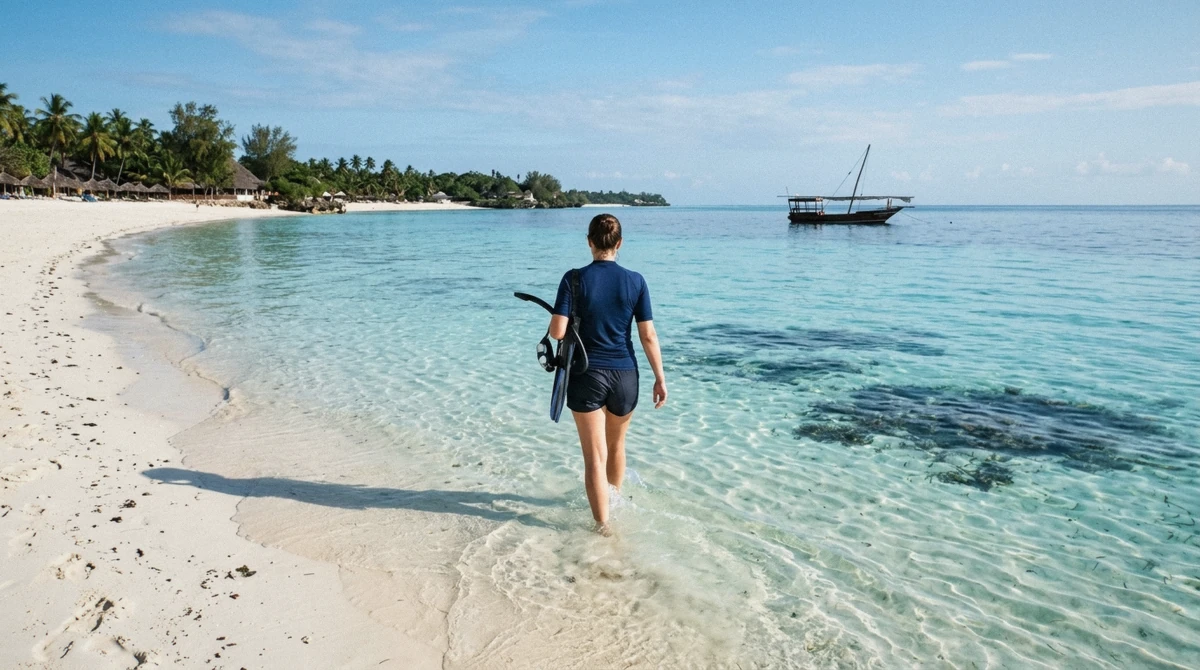
Quick answer
Zanzibar snorkeling from the beach works reliably in exactly one place: Nungwi, where a sandy drop-off with coral patches stays deep enough to swim most of the day, free with your own mask. Everywhere on the east coast the tide empties the lagoon by hundreds of metres, so a shore session there only exists in a narrow window around high water, and Blue Lagoon near Michamvi is the clearest example of that trap.
Key takeaways
- Nungwi is the island's one dependable shore snorkel, with a sandy drop-off and coral patches swimmable most of the day
- The east coast, Paje, Jambiani, Pingwe and Michamvi, empties hundreds of metres at low tide; check a tide chart before planning a shore session there
- Nungwi is also the only spot regularly offering night snorkeling, with bioluminescent plankton visible after dark
- Bring your own mask: rental kit across the island ranges from mediocre to unusable
- For the reefs beyond shore range, Mnemba and Tumbatu, see which reef each Zanzibar boat reaches
- A local boat from Nungwi to Tumbatu can be arranged for under $15, no guide or schedule, for travelers who want a near-shore option without booking a full tour
Where You Can Actually Snorkel from the Sand
Four places get mentioned for shore snorkeling in Zanzibar. Only one of them is dependable, and the table below states that plainly rather than listing all four as equally viable.
Two of the four belong on a real shore-snorkeling plan. The other two are worth knowing about mainly so a booked trip is not accidentally timed for a stretch of dry sand.
| Spot | Access | Tide window | What you see |
|---|---|---|---|
| Nungwi | Walk straight in from the beach | Swimmable most of the day | Sandy drop-off, coral patches, reef fish, night bioluminescence |
| Kendwa | Walk in, deep water close to shore | Swimmable most of the day | Sandy bottom, fewer coral patches than Nungwi |
| Blue Lagoon (Michamvi) | Walk in from the beach | High tide only, a few hours around the peak | Shallow starfish flats, tide-locked outside that window |
| East coast (Paje, Jambiani, Pingwe) | Beach, but sea retreats hundreds of metres at low water | Narrow high-tide window, unreliable for planning | Exposed sand flats most of the day; not a dependable shore snorkel |
Nungwi, Step by Step
Nungwi sits at the northern tip of the island, where the reef is open to the sea rather than boxed in by a tidal lagoon, and that geography is the entire reason it works when nowhere else reliably does.
The reef at Nungwi is narrow, with a sandy drop-off punctuated by coral patches, and because it faces open water rather than a shallow bay, it stays deep enough to swim through most of the day rather than draining out at low tide the way the east coast does. Entry is straightforward: wade in from the main beach near the northern point, where the drop-off is close enough to reach without a long swim out.
Going with your own mask costs nothing beyond the gear itself. A guided shore session, useful for a first visit or for pointing out where the coral patches sit, runs $15 to $30, a fraction of any boat trip on this site. Morning is generally calmer and clearer than afternoon, when the wind tends to pick up along this stretch of coast, and the same calm-morning logic that sends the Mnemba boats out around 07:30 makes an early shore session the better one at Nungwi too.
Expect company. Nungwi is a busy beach town, with resorts, dive shops and boat operators lined along the same stretch of sand, so a shore session here is not a private-reef experience the way a quiet mid-week Tumbatu boat can be. What it trades away in solitude it makes up for in convenience: no pickup time to plan around, no minimum group size and no cancellation risk from a boat operator's schedule.
Nungwi is also the one place on the island regularly offering night snorkeling with bioluminescent plankton, an experience no boat trip compared elsewhere on this site replicates. The coral itself is patchy rather than continuous and the beach draws persistent vendors, but no other spot on Zanzibar lets a traveler decide to snorkel twenty minutes before actually doing it.
Blue Lagoon and the East Coast Tide Trap
Zanzibar's tidal range is extreme, and the east coast is where that fact stops being trivia and starts deciding whether a snorkeling session happens at all.
How the tide actually moves
On the east coast, Paje, Jambiani, Pingwe and Michamvi, low water pulls the sea back hundreds of metres and leaves exposed sand flats where the lagoon sat a few hours earlier. This is not a minor variation; a beach that looks fully swimmable at high tide can be a walk across dry sand at low tide, with no water deep enough to snorkel anywhere in sight. Beach snorkeling on this coast is a two-to-three-hour window around high water, not something to decide on at lunchtime.
Blue Lagoon, near Michamvi and Pingwe, is the clearest example. It is genuinely snorkelable from the beach, shallow starfish shallows that photograph well and suit families, but only around high tide. Outside that window the lagoon is too shallow and too fragile underfoot to snorkel at all, and guided trips there are timed around the tide rather than around a fixed departure hour.
How to actually plan around it
Ask your hotel for a printed tide chart on arrival; every reception on the east coast keeps one, and it will do more for a shore snorkeling plan than any amount of comparing spots online. If a snorkeling session on the east coast is the goal, book it for the two to three hours either side of high water, and treat any other time of day as a beach walk, not a swim.
The north and north-west coast, Nungwi and Kendwa, is the exception to all of this, and that is precisely why it carries the shore-snorkeling reputation for the whole island. A fuller breakdown of the tide clock alongside the crowd patterns at the boat-only reefs lives on the best time to snorkel in Zanzibar page, since the same tide that empties the east coast also decides when the boat-reached sandbanks appear and disappear.
The practical mistake most first-time visitors make is booking a hotel on the east coast specifically for the beach photos and assuming that means easy snorkeling on demand. It does not. A stay in Paje or Jambiani is a genuinely beautiful base for kitesurfing, sunset walks and the wide flat sand itself, but pairing it with reliable snorkeling means either timing every session around the tide chart or driving north to Nungwi for the day, since the geography that makes the east coast's beaches so wide and dramatic at low tide is the same geography that empties the water a snorkeler needs.
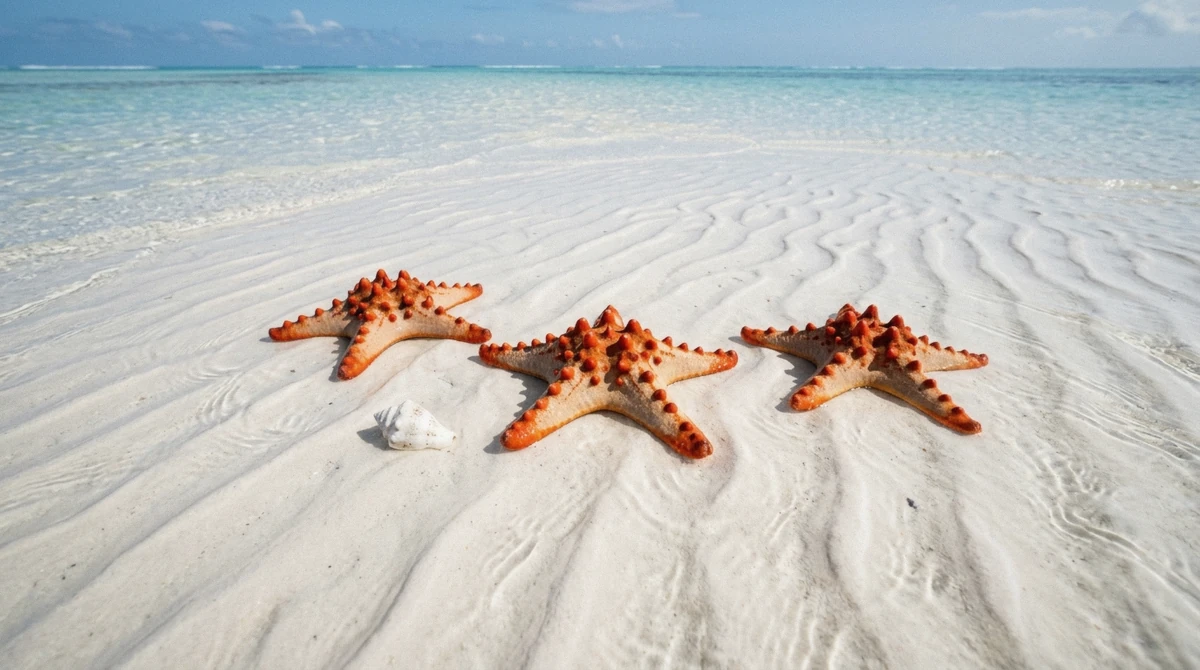
Shore-Accessible Spots, Mapped
Two spots work from the sand on their own terms; two more are technically shore-adjacent but tide-dependent or too limited to plan a day around.
Gear, and Why Rental Kit Fails Here
The single biggest reason a free or cheap shore session goes badly has nothing to do with the reef.
Rental mask and snorkel kit across the island ranges from mediocre to unusable, fogged lenses, worn straps, snorkels with valves that no longer seal. On a $55 to $90 boat trip that annoyance is survivable because the day includes a guide, a boat and other things to do; on a free shore session at Nungwi, a leaking mask is the difference between a good half hour in the water and giving up after five minutes.
Bring a personal mask and snorkel from home if the plan includes any shore snorkeling at all. Reef-safe sunscreen is also close to unbuyable in island supermarkets, and one listing on this site's own tours specifically requests biodegradable sunscreen in its packing notes, so pack it before arrival rather than counting on finding it locally. A rash guard is worth packing too, particularly July through September when the water runs cooler.
A well-fitted mask is worth testing before the trip even starts, not on the beach for the first time. Press it to your face without the strap and inhale gently through the nose; if it holds a light suction, the seal is good. That five-second check at home avoids discovering a leak only after wading in at Nungwi with no rental counter nearby offering anything better.
When a Boat Is the Only Answer
Shore snorkeling has a real ceiling. Mnemba Atoll, Tumbatu's healthier coral and Menai Bay's Safari Blue water are all reachable only by boat, and no amount of tide planning changes that.
Mnemba Island is private, ringed by the archipelago's best-known reef, and reachable only by boat; the Kendwa Mnemba trip crosses in under an hour and includes the marine conservation fee in its $55 price. The shortest crossing of any boat trip compared here is the Mnemba half-day from Muyuni, twenty minutes from a beach launch near Matemwe. For the full picture of which reef each Zanzibar boat reaches, including Menai Bay and the Prison Island sandbank, the six trips are compared side by side.
Tumbatu sits about two kilometres off the coast near Nungwi, with coral in noticeably better condition than Mnemba's and a fraction of the boat traffic. The organised small-group trip runs $71 and caps the boat at eight people, but a traveler comfortable arranging things independently can also hire a local boat from Nungwi to Tumbatu for under $15, with no guide, no kit and no fixed schedule, the closest thing on the island to a boat option that still feels like doing it yourself.
Either way, the honest line is this: shore snorkeling at Nungwi and a boat to Mnemba or Tumbatu are not competing options, they are two different days. A first Zanzibar snorkeling trip that combines a free morning at Nungwi with one booked reef crossing later in the stay gets the best of both without paying for a boat every single day.
What a boat buys that the beach cannot
Set the free option against the paid ones and the split is clean: the sand gets you water, the boat gets you reef.
| What you want | From the beach | On a boat |
|---|---|---|
| Cost | Free at Nungwi with your own mask, $15 to $30 guided | $41 to $90 per person before fees |
| Time flexibility | Decide twenty minutes beforehand, tide permitting | Fixed departure, usually early morning |
| Reef quality | Patchy coral, narrow reef, plenty of small life | Mnemba, Tumbatu or Menai Bay, the archipelago's proper reefs |
| Depth | Waist to chest deep in most places | Two to five metres at Mnemba |
| Equipment | Yours, or rental that is often poor | Mask, fins, snorkel and life jacket provided |
| Guidance | None unless you pay for it | A guide in the water on every trip compared here |
| Dolphins | No | On four of the trips compared here |
| Marine conservation fees | None at Nungwi | $25 at Mnemba, $10 elsewhere, sometimes included |

Safety and Local Etiquette
The rules that keep a shore session safe are simple, and they apply whether the day is free at Nungwi or booked on a boat.
In the water
Never snorkel alone at an unfamiliar entry point; the buddy system matters most exactly where there is no crew watching from a boat. Check the tide chart before entering anywhere on the east coast, and treat any current stronger than a gentle drift as a reason to get out rather than push on. Do not stand on coral, touch marine life or chase anything that swims away from you, at Nungwi or anywhere else.
On land
Zanzibar is a majority Muslim island, and modest dress is expected away from the tourist beach strip; a rash guard and board shorts or a one-piece cover more of the walk to and from the water than swimwear alone. Carry small-denomination cash if a guided shore session or gear rental is planned, since card machines are rare outside the main tourist areas, and confirm any guided session's price before entering the water rather than after. Photographing local people without asking is a common misstep for first-time visitors; a quick request beforehand is standard courtesy on this coast, at Nungwi and everywhere else.
Zanzibar Snorkeling from the Beach: Questions Travelers Ask
Which beach in Zanzibar is best for snorkeling?
Nungwi, at the island's northern tip. Its reef is open to the sea rather than tide-locked, with a sandy drop-off and coral patches swimmable most of the day.
Can you snorkel from the beach in Zanzibar?
Yes at Nungwi, reliably. Blue Lagoon near Michamvi also works from the sand, but only around high tide; the rest of the east coast is too tide-dependent to plan a shore session around.
Do I need a boat to snorkel in Zanzibar?
Only for the reefs beyond shore range, Mnemba, Tumbatu and Menai Bay among them. Nungwi and, to a lesser extent, Kendwa are the shore-snorkeling exceptions.
What time of day should I snorkel from the beach in Zanzibar?
At Nungwi, morning tends to be calmer than afternoon. On the east coast, plan around high tide specifically, two to three hours either side of it, since low tide empties the water entirely.
What should a woman wear on the beach in Zanzibar?
Modest dress away from the tourist beach strip; a rash guard and board shorts or a one-piece cover more than swimwear alone, and it is worth carrying a cover-up for the walk to and from the water.
Is shore snorkeling in Zanzibar free?
Yes at Nungwi, with your own mask. A guided shore session there costs $15 to $30, still far below any boat trip's price.
Can I snorkel at Blue Lagoon without a boat?
Yes, but only around high tide. Outside that window the lagoon is too shallow to snorkel, and most guided Blue Lagoon trips time their visit around the tide rather than a fixed hour.
Ready for a reef the shore cannot reach? Compare the boat trips to Mnemba, Tumbatu and Menai Bay.